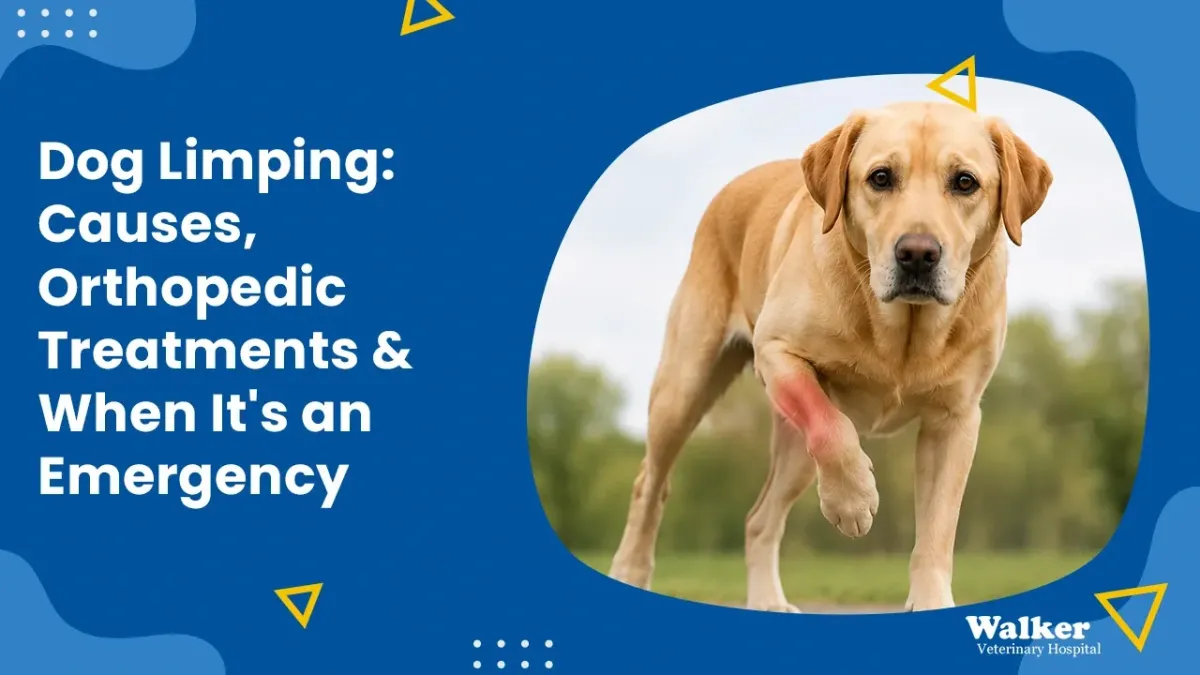
Dog Limping: Causes, Orthopedic Treatments & When It's an Emergency
Watching your dog suddenly start limping can be concerning. Whether your pet refuses to put weight on one leg, walks with an unusual gait, or struggles to stand, limping is often a sign that something isn't right. While some cases result from minor paw injuries, others may indicate a more serious orthopedic condition requiring prompt veterinary care.
Understanding the possible causes of limping and knowing when to seek treatment can help protect your dog's comfort, mobility, and long-term health. If you're searching for dog limping treatment Stockton CA, early evaluation by an experienced veterinary team can identify the underlying problem before it worsens.
What Does Dog Limping Mean?
Dog limping, also known as lameness in dogs, is an abnormal walking pattern caused by pain, weakness, injury, or joint dysfunction in one or more limbs.
Your dog may:
Avoid putting weight on one leg
Walk slowly or stiffly
Hold a paw off the ground
Cry when moving
Have difficulty getting up
Show reduced activity
Some dogs develop limping suddenly after an injury, while others gradually develop dog mobility problems caused by arthritis or orthopedic disease.
Regardless of the cause, persistent limping should never be ignored.
Common Causes of Dog Limping
Many cases of limping are caused by relatively minor injuries that still require veterinary evaluation.
Paw Injuries
Cuts, punctures, burns, or foreign objects trapped between the paw pads can make walking painful.
Always inspect your dog's paws after walks, especially in parks, hiking trails, or rough terrain.
Torn Nails
A broken or torn nail can cause sudden pain and bleeding.
Dogs often begin limping immediately after the injury and may lick the affected paw continuously.
Sprains
Just like people, dogs can strain muscles or sprain ligaments after running, jumping, or rough play.
Mild sprains may improve with rest, but persistent limping requires examination.
Foxtails
Foxtails are sharp grass seeds that commonly become lodged between a dog's toes or penetrate the skin.
These painful foreign bodies may cause swelling, limping, infection, and persistent discomfort.
Insect Stings
Bee stings, wasp stings, or other insect bites can cause sudden limping due to pain and localized swelling.
If swelling progresses rapidly or your dog has difficulty breathing, seek emergency veterinary care immediately.
Orthopedic Conditions That Can Cause Limping
Some cases of limping originate from the bones, joints, ligaments, or muscles rather than the paw itself. These conditions often require advanced veterinary orthopedic care Stockton CA.
Cranial Cruciate Ligament (CCL) Injury
A Cranial Cruciate Ligament (CCL) injury—often described as a torn ACL in dogs—is one of the most common orthopedic injuries in dogs.
Symptoms include:
Sudden limping
Difficulty standing
Swollen knee
Reluctance to run or jump
Depending on the severity, treatment may include rest, rehabilitation, or cat orthopedic surgery Stockton CA.
Hip Dysplasia in Dogs
Hip dysplasia in dogs is a developmental condition where the hip joint does not fit together properly.
Signs may include:
Difficulty rising
Bunny hopping
Reduced exercise tolerance
Rear leg weakness
Chronic limping
Early diagnosis can improve comfort and slow disease progression.
Luxating Patella
A luxating patella occurs when the kneecap slips out of its normal position.
Affected dogs may:
Skip while walking
Suddenly hold a leg up
Resume walking normally moments later
Mild cases may be managed conservatively, while more severe cases sometimes require surgery.
Elbow Dysplasia
Elbow dysplasia commonly affects large-breed dogs and develops as the elbow joint grows abnormally.
Signs often include:
Front leg limping
Joint stiffness
Pain after exercise
Reduced activity
Early treatment may improve long-term mobility.
Arthritis in Dogs
Arthritis in dogs is one of the most common causes of chronic limping, particularly in senior pets.
Symptoms often develop gradually and include:
Morning stiffness
Difficulty climbing stairs
Slower walks
Less interest in play
Early pain management and weight control can significantly improve quality of life.
Bone Fractures and Joint Injuries
Accidents, falls, or trauma may result in bone fractures in dogs or other joint injuries in dogs.
These injuries require immediate veterinary evaluation and often diagnostic imaging.
How Veterinarians Diagnose Dog Limping
Finding the exact cause of limping requires a thorough evaluation by an orthopedic veterinarian Stockton CA.
Your veterinarian may recommend:
Physical Examination
A complete physical exam helps identify swelling, pain, wounds, or abnormal joint movement.
Gait Evaluation
Watching your dog walk allows the veterinarian to determine which limb is affected and evaluate the severity of the lameness.
Digital X-Rays
Digital radiographs help diagnose:
Bone fractures
Arthritis
Hip dysplasia
Joint abnormalities
Certain orthopedic diseases
Advanced imaging often provides valuable information for treatment planning.
Orthopedic Examination
Special orthopedic tests evaluate ligament stability, joint function, muscle strength, and range of motion to identify injuries such as CCL tears or patellar luxation.
Dog Orthopedic Treatment Options
Treatment depends on your dog's age, activity level, overall health, and the underlying diagnosis.
Rest and Medication
Minor injuries may improve with:
Activity restriction
Anti-inflammatory medications
Cold therapy
Controlled exercise
Anti-Inflammatory Therapy
Reducing inflammation helps relieve pain while supporting healing.
Your veterinarian will recommend medications appropriate for your pet's condition.
Pain Management
Modern pain management may include:
Prescription medications
Joint supplements
Laser therapy (if available)
Weight management
Comfort is an important part of orthopedic recovery.
Rehabilitation
Some dogs benefit from rehabilitation programs designed to improve strength, flexibility, and mobility following injury or surgery.
Orthopedic Surgery (When Needed)
Certain orthopedic conditions require veterinary orthopedic surgery to restore function and improve comfort.
Examples include:
CCL injuries
Complex fractures
Luxating patella repair
Severe joint instability
When appropriate, your veterinarian will discuss available treatment options.
TPLO and Ligament Repair Procedures
For many large dogs with torn ACL in dogs, advanced procedures such as TPLO (Tibial Plateau Leveling Osteotomy) or other ligament stabilization techniques may be recommended by a qualified orthopedic surgeon when clinically appropriate.
When Is Limping an Emergency?
While mild limping may occasionally improve with rest, some situations require immediate veterinary attention.
Seek emergency care if your dog:
Cannot bear weight on a leg
Has severe swelling
Has a visibly broken limb
Is bleeding heavily
Was hit by a vehicle
Cries continuously from pain
Has difficulty breathing along with the injury
Shows signs of shock or collapse
Prompt evaluation can prevent further injury and improve recovery.
How to Prevent Orthopedic Injuries
Although not every injury can be prevented, these steps may reduce your dog's risk of orthopedic problems:
Maintain a healthy weight.
Provide regular low-impact exercise.
Avoid repetitive high jumps.
Keep nails properly trimmed.
Use non-slip flooring when possible.
Schedule routine wellness examinations.
Address limping early instead of waiting.
Preventive care helps dogs remain active throughout every stage of life.
Help Your Dog Stay Active and Comfortable
If your dog is limping, showing signs of pain, or experiencing reduced mobility, early evaluation is the best way to identify the cause and begin appropriate treatment. At Walker Veterinary Hospital, our team provides comprehensive examinations, diagnostic imaging, and personalized treatment plans for dogs with orthopedic injuries and mobility concerns. Whether your pet has a minor injury or requires advanced orthopedic evaluation, we're committed to helping them return to a comfortable, active life.
Frequently Asked Questions
Why is my dog suddenly limping but not crying?
Dogs often hide pain instinctively. Even if your dog isn't vocalizing, limping can indicate an injury, joint problem, ligament tear, or another orthopedic condition that should be evaluated by a veterinarian.
Can a dog limp heal on its own?
Minor sprains or paw irritations may improve with rest, but limping that lasts longer than 24–48 hours, worsens, or is accompanied by swelling or severe pain should be examined promptly.
How do veterinarians diagnose the cause of dog limping?
Diagnosis typically includes a physical examination, gait evaluation, orthopedic assessment, and digital X-rays. Additional imaging or laboratory tests may be recommended depending on your dog's symptoms.
When does a limping dog need orthopedic surgery?
Orthopedic surgery may be recommended for conditions such as cranial cruciate ligament (CCL) injuries, certain fractures, severe luxating patella, or other joint problems that cannot be effectively managed with conservative treatment alone.