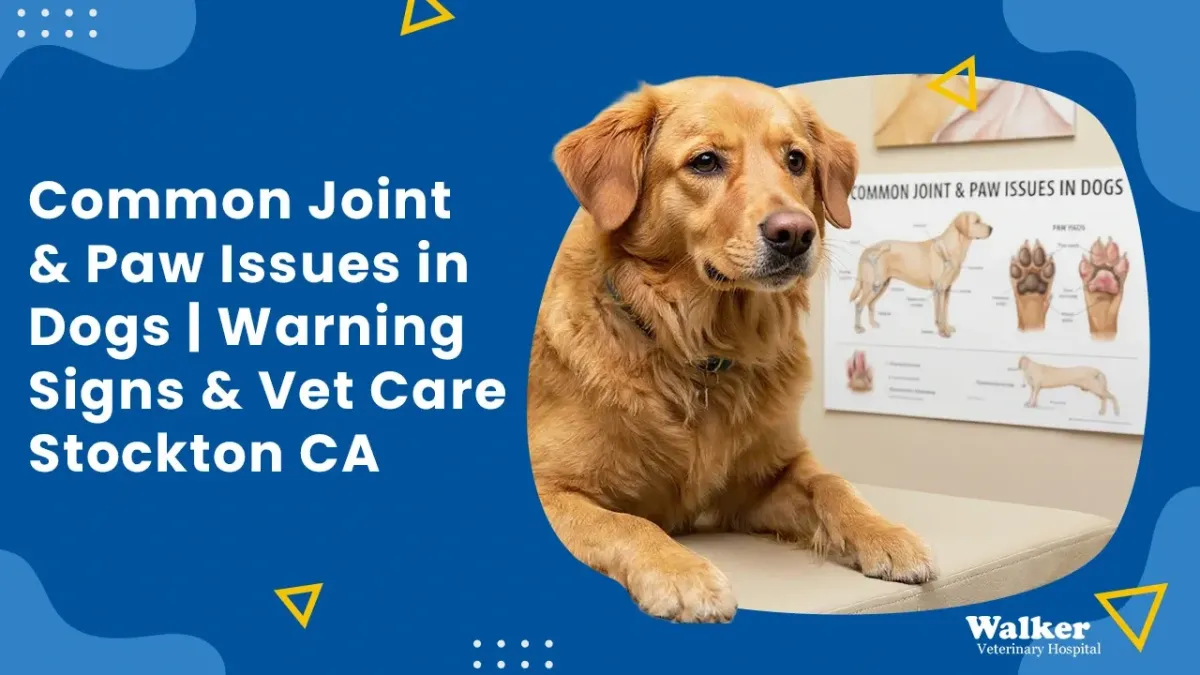
Common Joint & Paw Issues in Dogs: Warning Signs & When to Visit the Vet
As a caring pet parent, noticing your dog limping or favouring one leg can be worrying. Dogs may hide discomfort until the pain worsens — which is why early awareness of joint and paw problems is so important. At Walker Vet (serving Stockton, CA and surrounding areas), we believe every dog deserves timely care so mobility issues don’t turn into chronic problems.
If you’re searching for “dog joint pain treatment Stockton CA,” “dog orthopaedic vet Stockton CA,” or “dog paw injury vet Stockton,” read on to learn how to recognize common joint and paw issues, what causes them, and when to bring your dog in for professional care.
🐾 Common Joint & Paw Problems in Dogs
Carpal Hyperextension (and other front-paw issues)
In many dogs — especially active ones or larger breeds — the front legs and paws can undergo strain. Carpal hyperextension occurs when the carpal joint gives way under pressure, causing the wrist area (front paw) to collapse or bend backwards. It often shows up as:
Visible paw collapse or abnormal paw angle when weight-bearing
Limping or reluctance to walk / run
Swelling around the paw or wrist joint
Joint Stiffness, Arthritis & Degenerative Conditions
As dog’s age or after repetitive strain, joints may become stiff, painful, or inflamed. Causes can include wear-and-tear, past injury, or genetic predispositions. Common signs:
Stiffness after rest — difficulty rising, climbing stairs, or jumping
Slowing down for walks, reluctance to play
Joint swelling or unusual heat around joints
Favouring one paw, shifting weight to other legs
Acute Injuries — Sprains, Ligament Strains, Paw Trauma
Dogs are curious creatures — a misstep, fall, or trauma (e.g. stepping on sharp object) may result in sprains, ligament tears, or paw injuries. These often lead to:
Sudden limping or refusal to put weight on affected leg
Swelling, bruising or sensitivity around paw or joint
Pain when touched or during movement
⚠ When to Worry — Key Warning Signs
Monitor your dog closely. If you notice any of the following, it’s time to consult a professional:
Limping lasting more than 24–48 hours
Visible paw collapse or abnormal paw posture
Swelling, heat, or obvious pain in a paw or joint
Refusal to bear weight, jump or climb
Recurrent stiffness — for example after naps or resting
Sudden change in gait, reluctance to exercise
Especially with conditions like carpal hyperextension treatments or ligament injuries, delaying care can worsen joint damage — increasing risk of chronic issues like arthritis.
🩺 Why You Should Seek Expert Care - What to Expect?
When you bring your dog to a qualified dog orthopedic vet near Stockton CA or dog paw and leg specialist, a proper evaluation may include:
A full physical and orthopaedic exam — checking joints, weight distribution, paw posture.
Diagnostic imaging (X-rays) to assess joint alignment, bone integrity, ligament health.
Pain and mobility assessment — to determine severity of injury or degenerative change.
Treatment plan — which may range from conservative to surgical, depending on injury.
If you’re looking for “dog joint issues” care, “dog leg injury vet near Stockton,” or “dog orthopedic surgery,” early diagnosis can make all the difference.
At Walker Veterinary Hospital, we offer advanced diagnostics, personalized care plans, and post-treatment support tailored to your dog’s needs.
🩹 Treatment & Recovery: What Care Looks Like
Treatment for joint or paw issues depends on the specific problem:
For mild sprains, early-stage stiffness or minor paw issues: Rest, controlled activity, supportive bandaging or splinting, anti-inflammatory or pain-relief meds (as vet-prescribed), cold or warm compresses, and periodic re-checks.
For carpal hyperextension or ligament damage: In many cases, dogs benefit from targeted therapy — rest plus bracing/splinting; in more severe cases, surgical stabilization (dog orthopedic surgery) may be recommended.
For chronic joint problems (arthritis, degenerative joint disease): A long-term management plan: controlled exercise, weight management, joint supplements (as advised), pain management, and periodic vet check-ups.
During recovery, owners should follow the vet’s guidance strictly: limited activity, scheduled re-evaluations, and gradual reintroduction to exercise. This approach helps restore mobility and reduce risk of re-injury.
✅ How Pet Parents in Stockton Can Help Prevent Joint & Paw Issues
Prevention is always better than treatment. Here are proactive steps:
Maintain healthy body weight — overweight dogs have extra stress on joints.
Controlled exercise — avoid excessive jumping, rough terrain, or high-impact activity, especially for young or senior dogs.
Provide proper footing — avoid slippery surfaces; use rugs or non-slip mats, especially for older dogs.
Regular vet checkups — early detection of joint stiffness or paw abnormalities.
Watch for subtle signs — reluctance to play, slight limping after walks, or minor paw swelling. Early vet visit can prevent long-term damage.
📞 When to Contact Walker Vet (Stockton CA)
If your dog shows any signs of paw collapse, limping, swelling, stiffness, or sudden inability to walk comfortably — don’t wait. Search terms like “dog limp treatment Stockton CA”, “dog mobility treatment Stockton CA”, or “dog paw injury vet Stockton” often reflect exactly when a visit is needed.
At Walker Vet, our team is ready to evaluate, diagnose, and design a care plan — whether it’s conservative therapy, bracing/splinting, or if needed, orthopedic surgery or advanced treatment options.
🎯 Final Thoughts
Joint and paw issues — such as carpal hyperextension, ligament injuries, arthritis, or paw trauma — can seriously impair your dog’s quality of life. Early recognition and prompt veterinary attention are key. If you’re in or around Stockton, CA, and searching for “dog joint pain treatment Stockton CA,” “dog orthopaedic vet Stockton CA,” or “dog paw and leg specialist,” don’t hesitate — a timely vet visit could mean the difference between a quick recovery and chronic problems.
Your dog depends on you. With vigilant care, proper treatment, and regular check-ups at Walker Vet, you can help ensure your pet stays active, happy, and pain-free for years to come.